Promoting Healthier Lifestyles Through UX Design
The goal is simple: to live a healthy active life. But the journey is riddled with obstacles - lack of motivation, difficulty in tracking progress, and an overwhelming sea of information. HabitHero’s use case tackles these issues, offering features like automated progress tracking, personalised goals, and clear information delivery.
Background
PrimeCare is an insurance company based in the United Kingdom with a focus on prevention. They provide people with the support and incentives needed to achieve better health outcomes through the use of innovative products and services.
HabitHero is their new concept product that aims to help users make healthier choices in their daily routine. In this fictitious project, which is part of the King’s UX Design Career Accelerator program, I tackled the challenges users face in reaching their health goals, exploring solutions that not only empowered users to live healthier but also aligned with HabitHero's goals of increasing user acquisition and retention.
Analysing the MVP failure
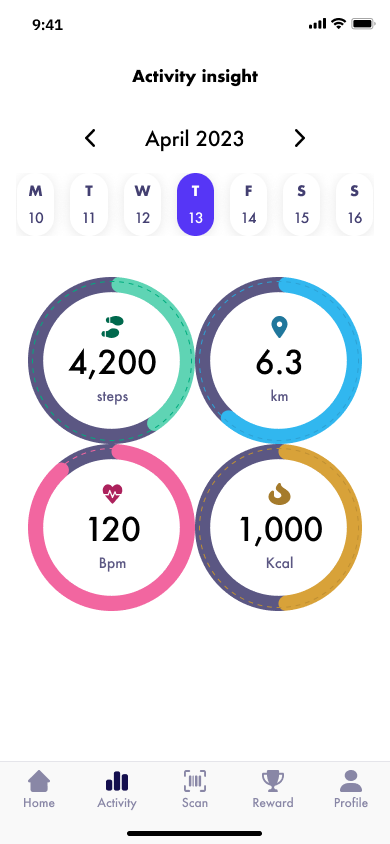
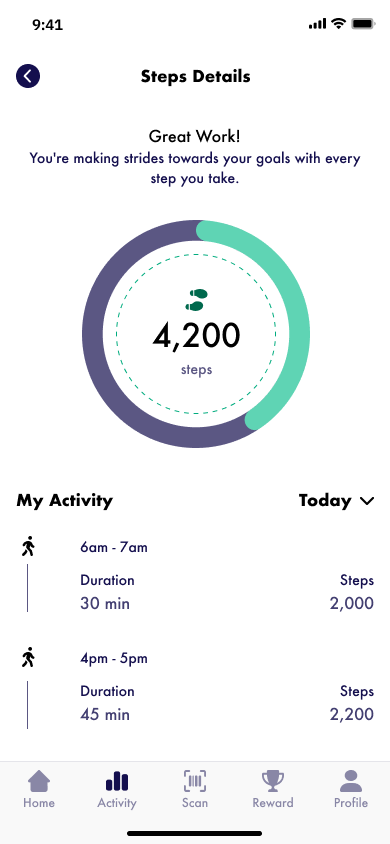
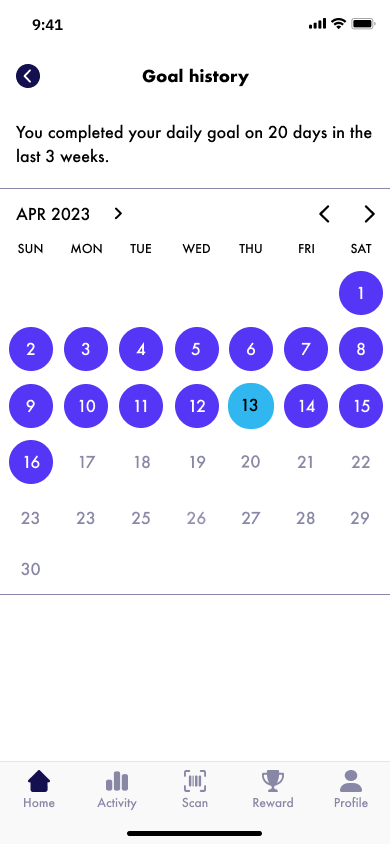
As a starting point I was given an initial MVP(Minimum Viable Product) for the HabitHero app and user testing results on this. Based on the initial user feedback it was clear that there was a lack of focus on core user needs and innovation. This resulted in a design that didn’t effectively address user challenges; impacting user engagement.
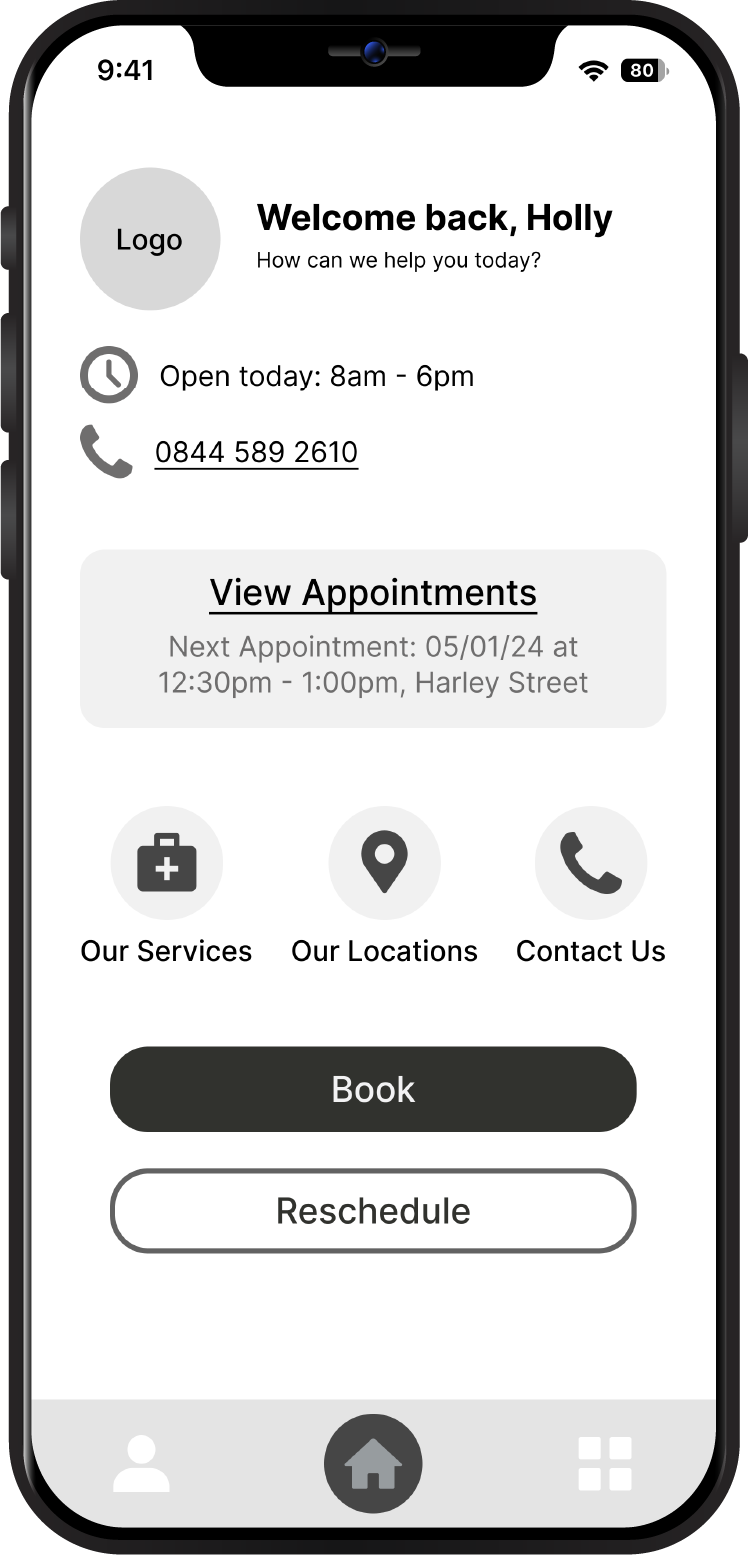
A comprehensive analysis of the existing Graphical User Interface (GUI) revealed critical usability issues. Here's what I found:
- Inconsistent Visual Hierarchy & Layout: Incohesive design elements disrupted user understanding of the app's structure and flow.
- Lack of Design Cohesion: The app's design lacked a clear visual identity, making navigation confusing.
These issues contributed to lower user engagement and app abandonment.
Researching User Needs
To gain a deeper understanding of user needs and preferences regarding health and fitness tracking, I conducted a series of semi-structured interviews. These interviews focused on uncovering the following:
- Motivations for Staying Healthy: What truly motivates users to maintain a healthy lifestyle and what keeps them engaged with their health goals.
- Tracking Preferences: Which metrics, tools, and methods users find most valuable when tracking their progress.
- Goal Setting Challenges: What challenges users face when setting and reaching health and fitness goals.
From Data to Discovery
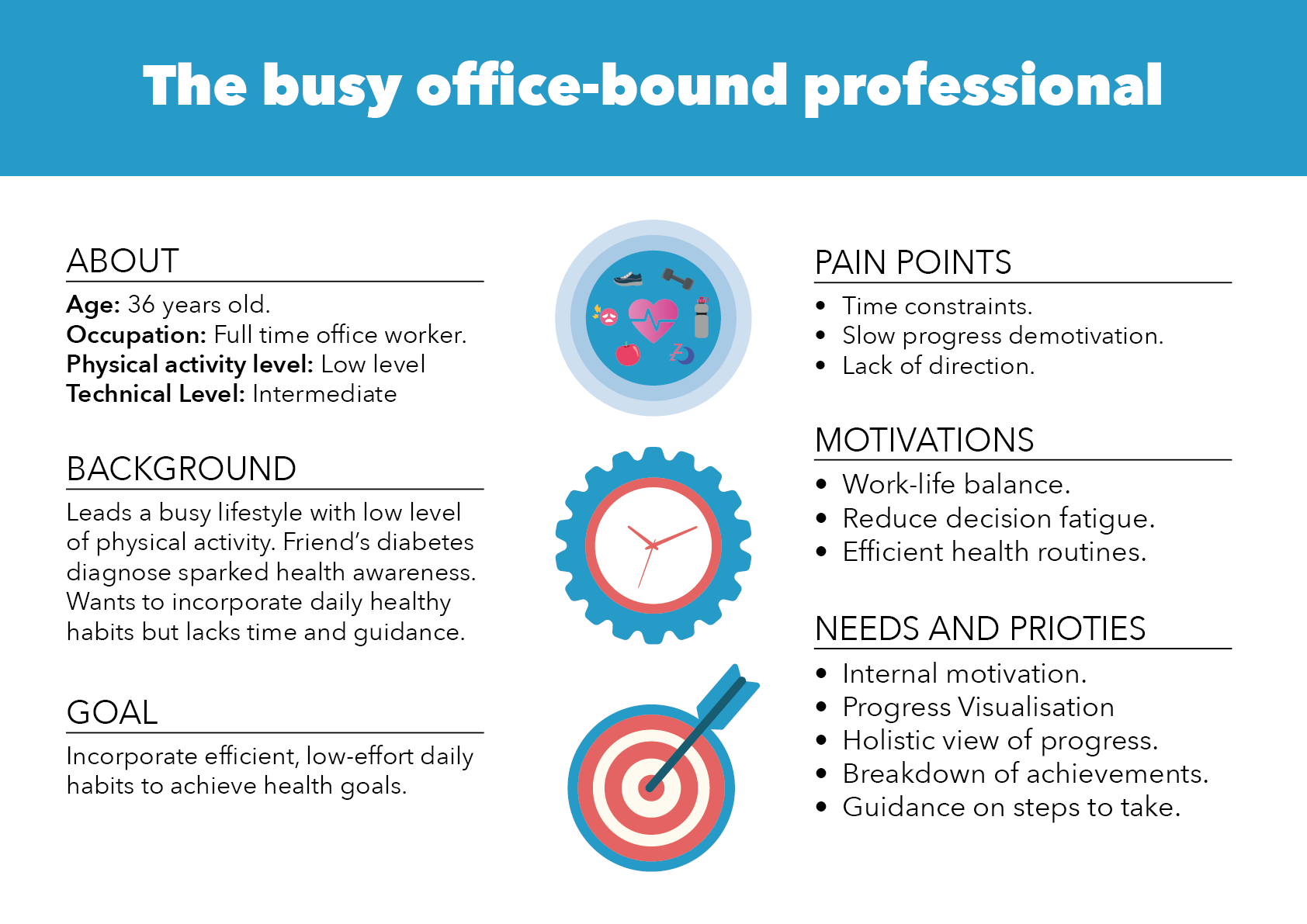
User interview data played a crucial role in uncovering users' needs and challenges. From the user personas and common needs definition, it became clear that users prioritised:
- Efficiency: Minimise time spent managing their health journey.
- Actionable Insights: Meaningful insights of their progress and actionable steps to achieve their goals.
- Holistic View: See progress across all aspects of wellness - physical, mental, nutritional, and sleep.
- Motivation Boost: Tools to stay inspired, especially when they make slow progress.
Exploring Solutions through Mind Mapping
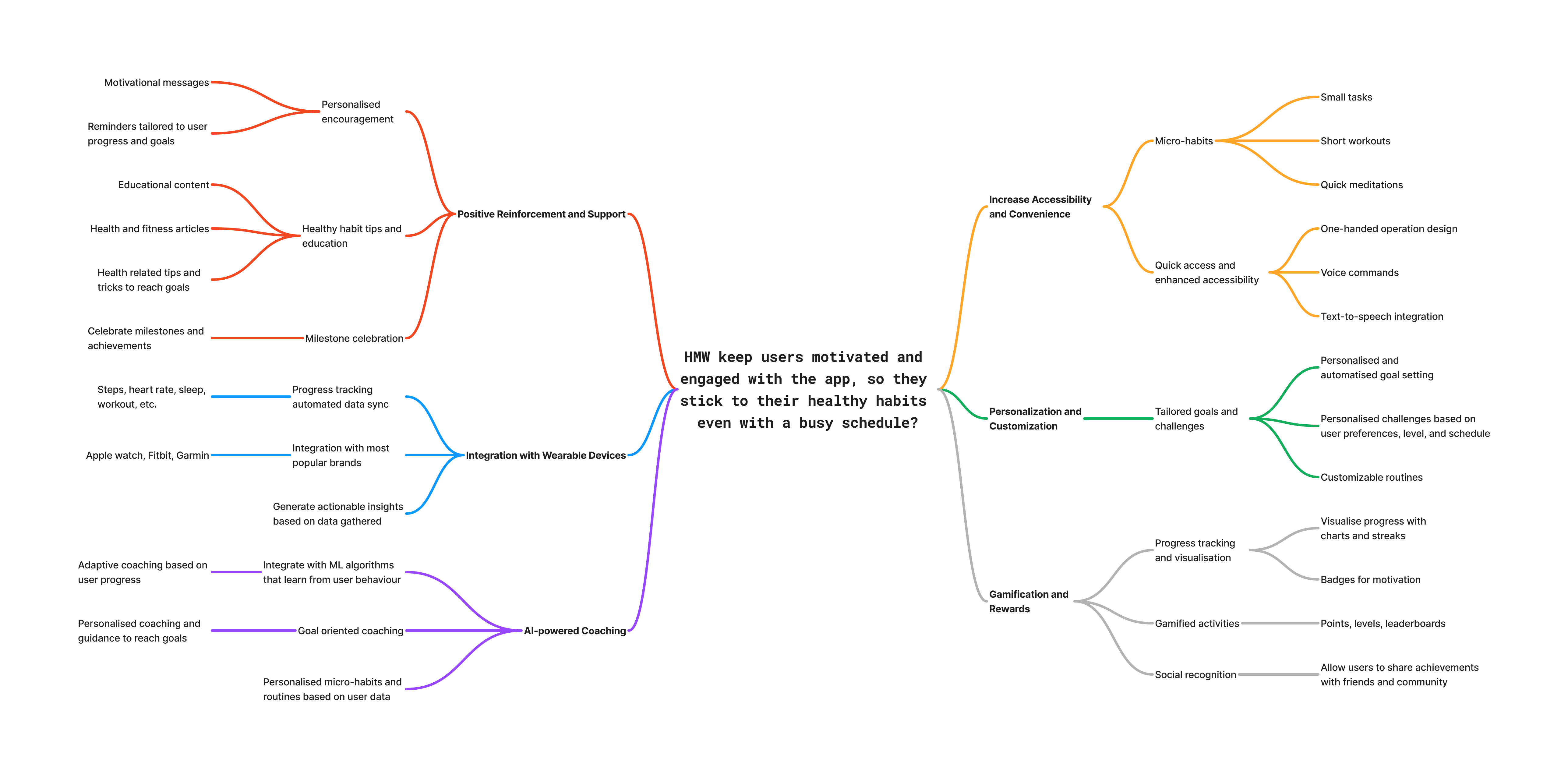
User research revealed users felt overwhelmed by the volume of health data, hindering their ability to analyse and understand it effectively. By using ‘How Might We’ questions based on these needs, together with the Mind Mapping technique, I was able to explore creative solutions while keeping users’ needs at the forefront of the design process. Some of these ideas included: gamification with rewards, wearable device integration, and personalised coaching powered by machine learning algorithms.
Developing the new HabitHero Concept
After analysing the generated ideas, I prioritised those that demonstrably addressed user needs while aligning with business goals.
With that in mind, the chosen concept focused on streamlining the user experience; leveraging AI to provide personalised insights and actionable recommendations, thereby eliminating the need for manual data input and analysis. Additionally, the concept aimed at bridging the gap between goals and actions, offering users with the tools that help them translate their aspirations into concrete steps for achieving health success.
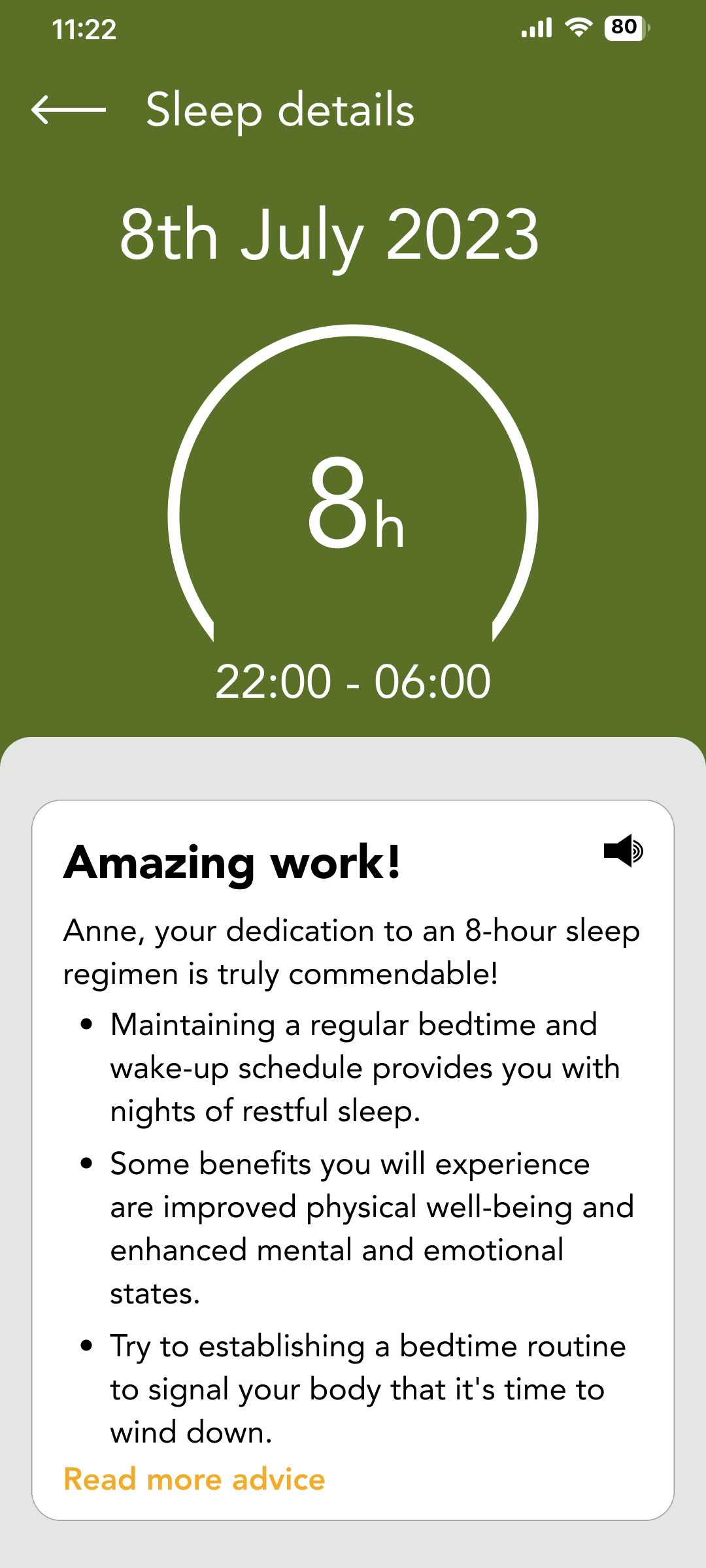
Personalised Progress Reports with AI Insights
Value-only reports can be generic and leave users wondering 'what's next?'. As user research highlighted, users have a desire for more meaningful insights and actionable steps.
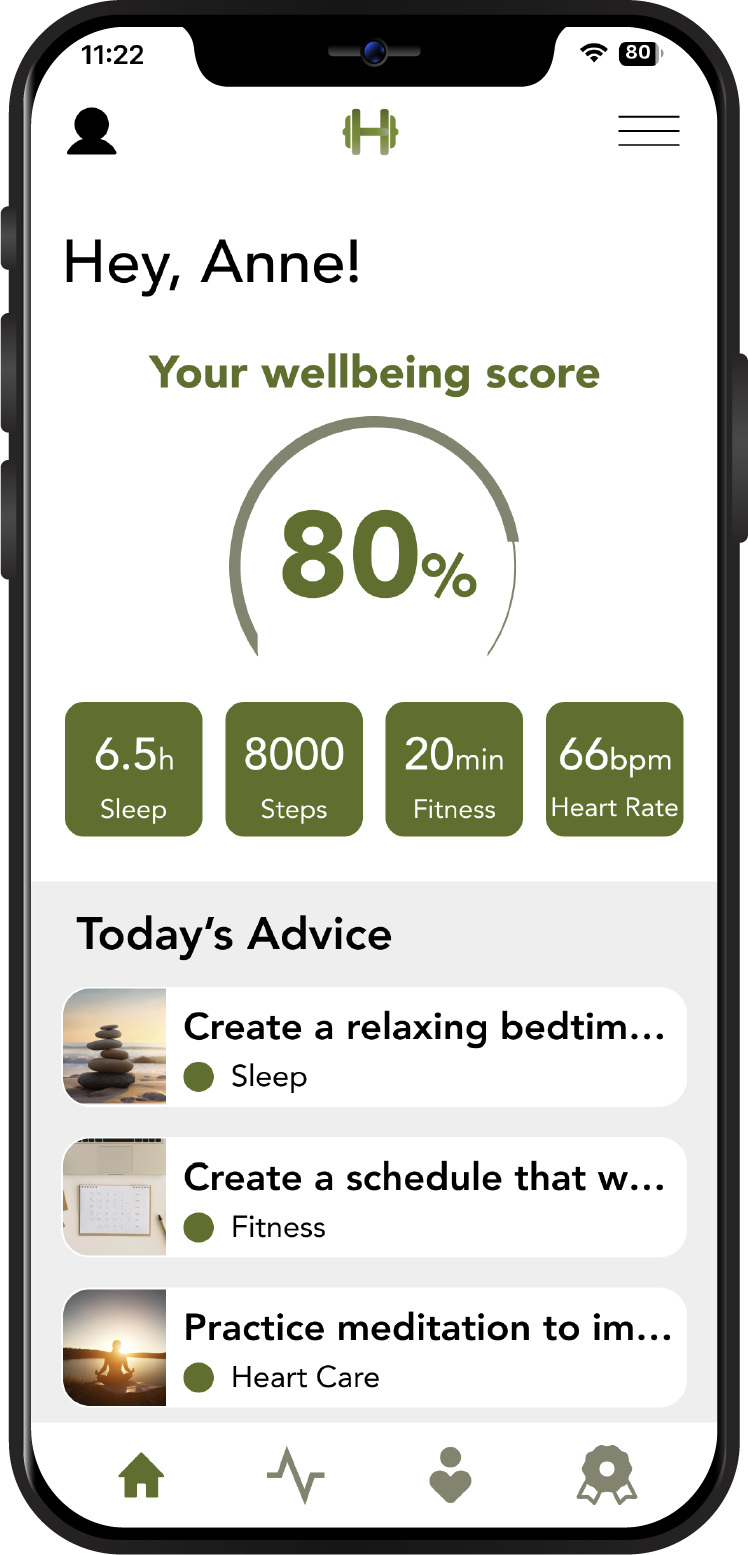
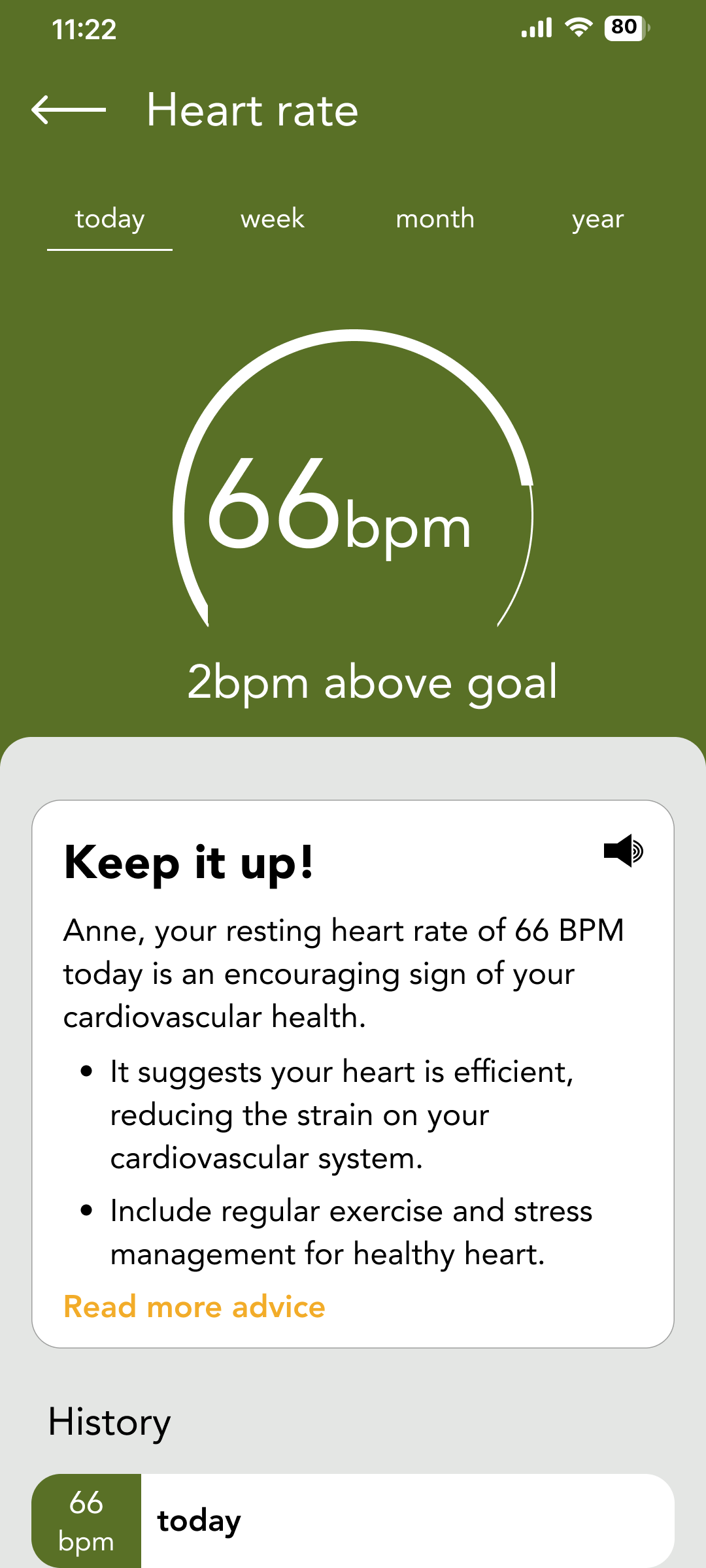
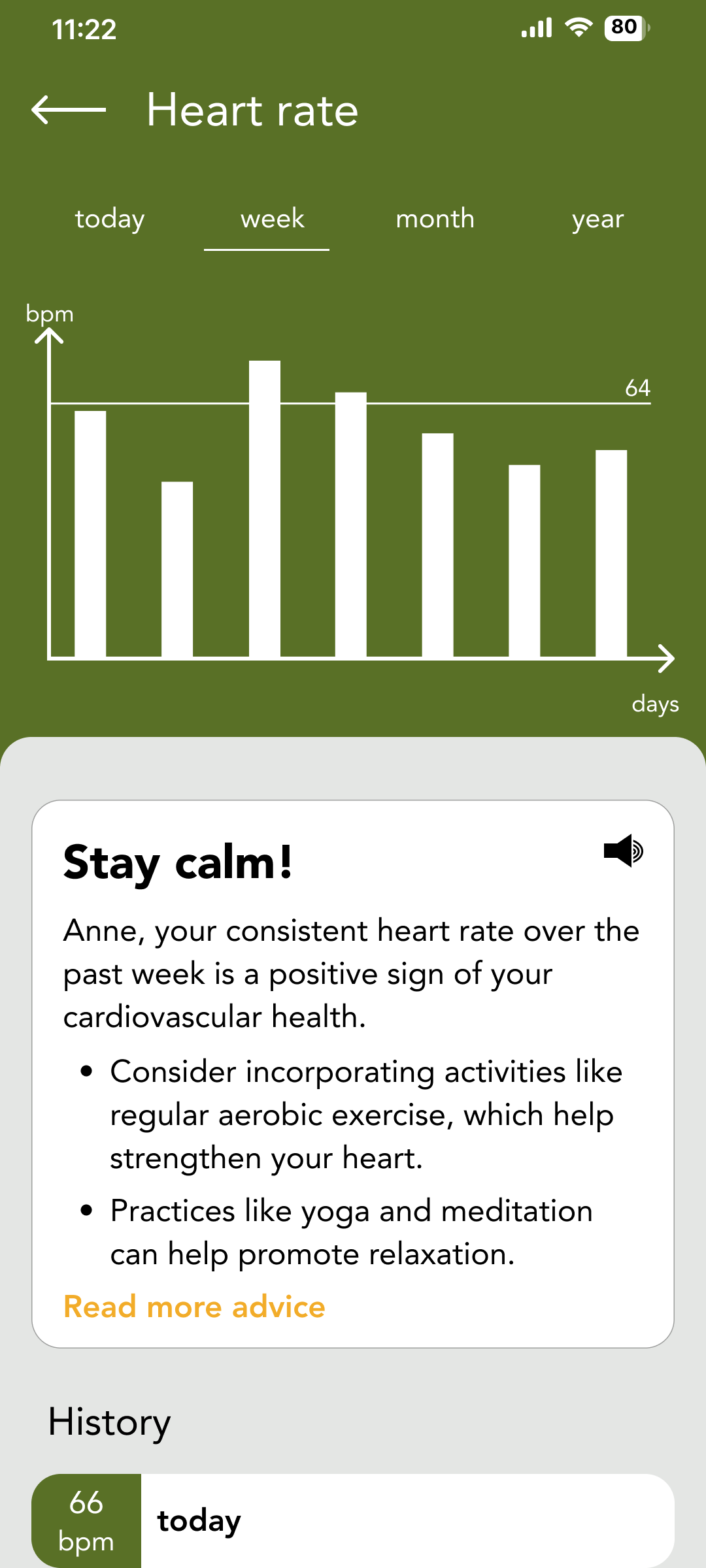
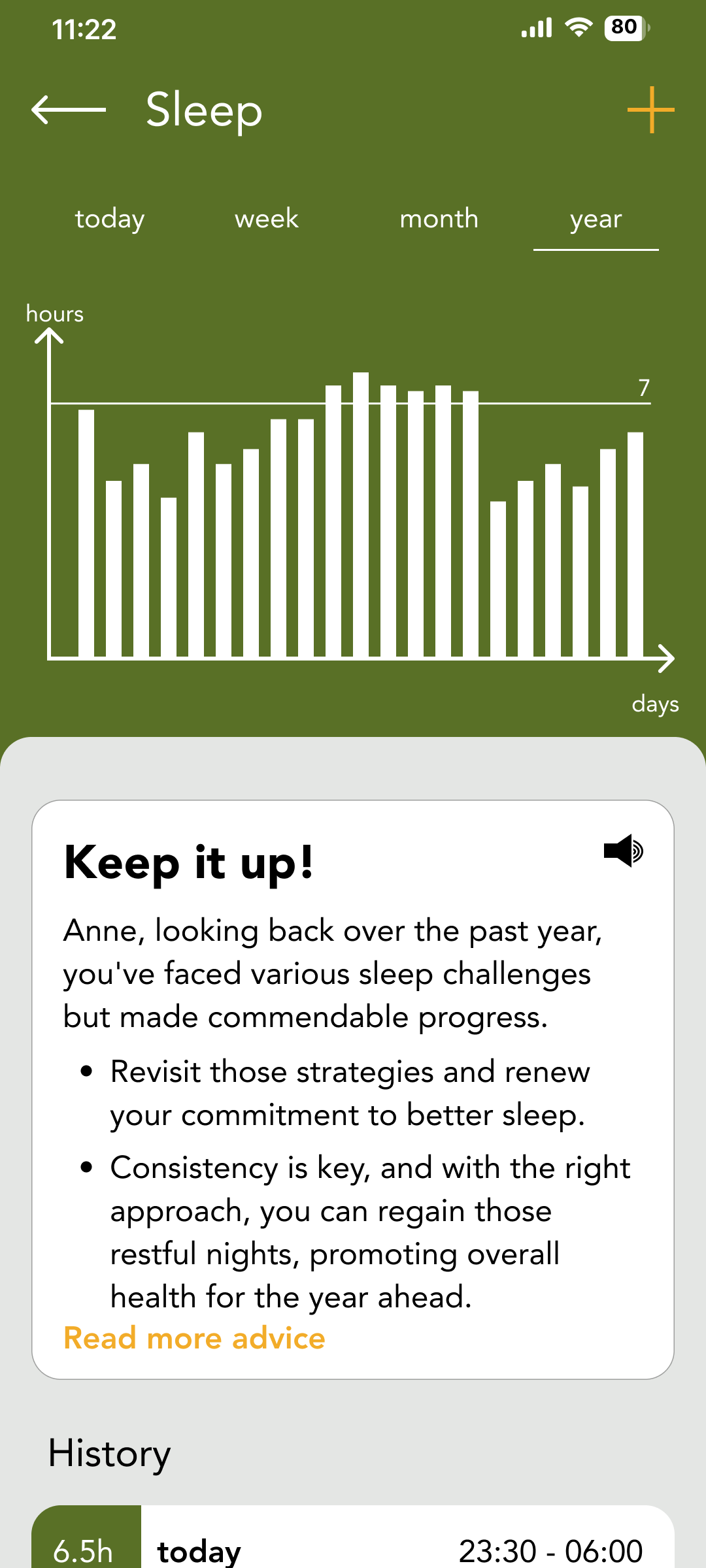
Our concept addresses this by offering personalised progress reports powered by AI analysis of users' data. This innovative feature unlocks valuable insights and individualised feedback, translating complex health data – numerical graphs and value points – into clear, descriptive text. This empowers users to understand their progress and receive targeted tips to keep working towards their health goals. Ultimately, fostering a sense of engagement and motivation, making healthy habits feel achievable and promoting a sustainable long-term lifestyle.
Curated Health & Wellness Advice
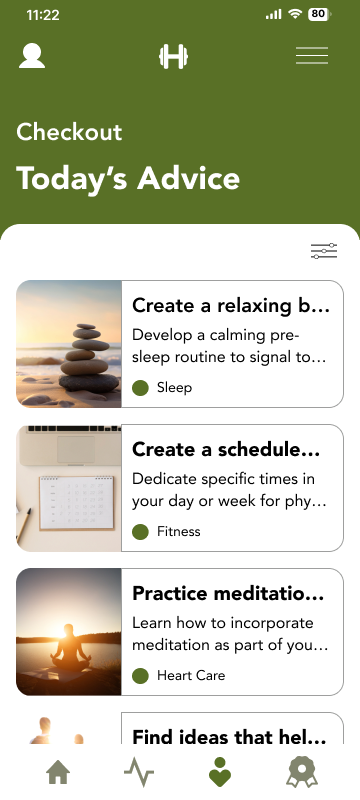
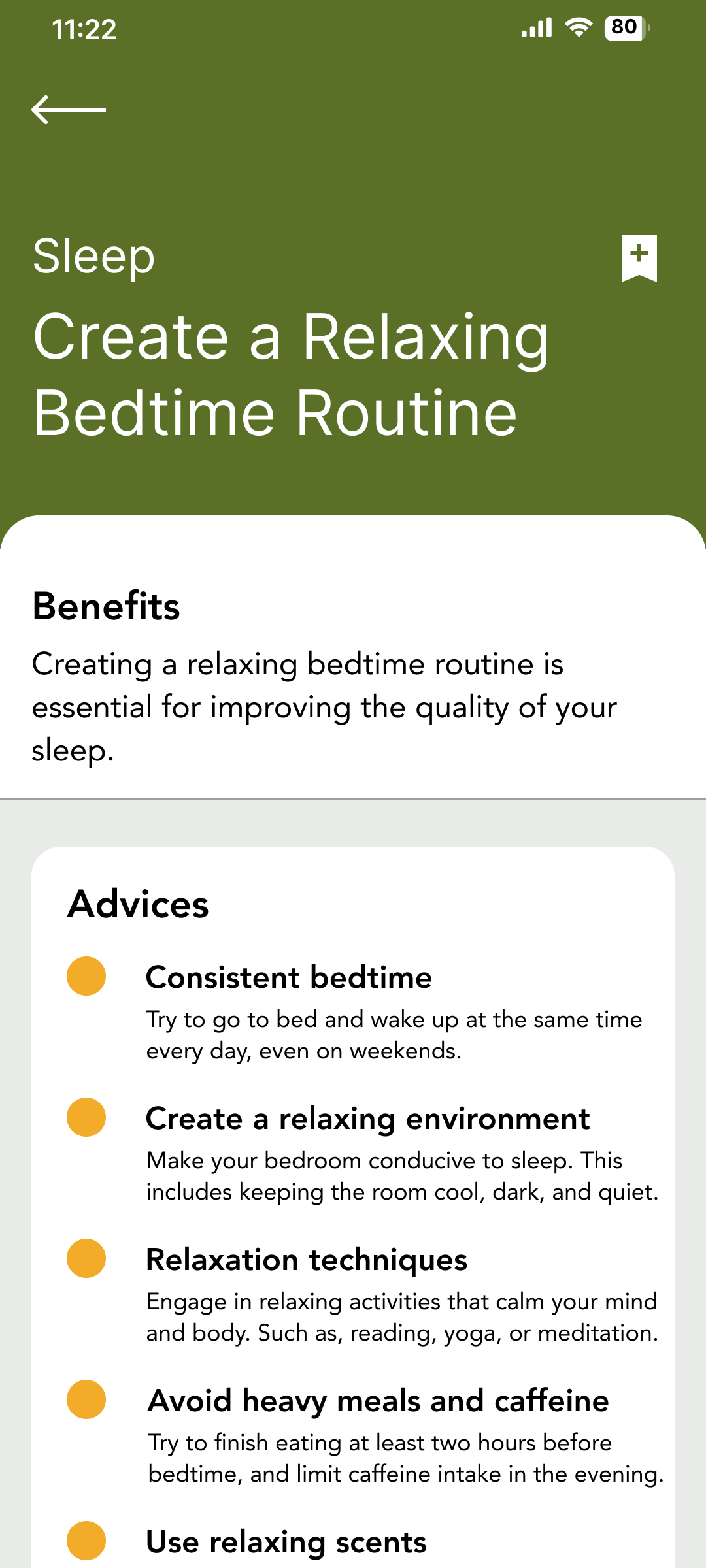
The struggle to navigate the overwhelming sea of information and conflicting health tips can discourage users and make them abandon their wellness journey. The ‘Curated Health & Wellness’ section addresses this challenge by providing a centralised location for trustworthy articles and tips on sleep, mindfulness, exercise, and overall well-being. This ensures users have access to high-quality content, empowering them to set and reach their health goals without confusion.
Refining the Design Through User Testing
To ensure the design aligned with user needs, I prioritised refining core functionalities through iterative user testing of a mid-fidelity prototype. This allowed me to assess user interaction and gather critical feedback on two key areas:
- HabitHero's Health Tracking System: Did the system effectively empower users to track their health data and translate that information into actionable insights? Did it ultimately help them make informed decisions about their health journey?
- Main Navigation Flow: Could users navigate through the app easily and intuitively? Did the navigation flow support their goals and encourage efficient interaction with the app's features?
Key User Testing Findings
User testing sessions provided valuable insights, validating the core UX logic and revealing the following key areas for improvement:
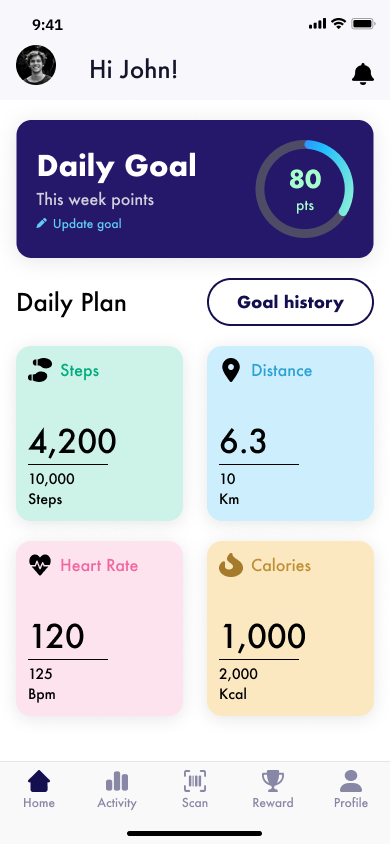
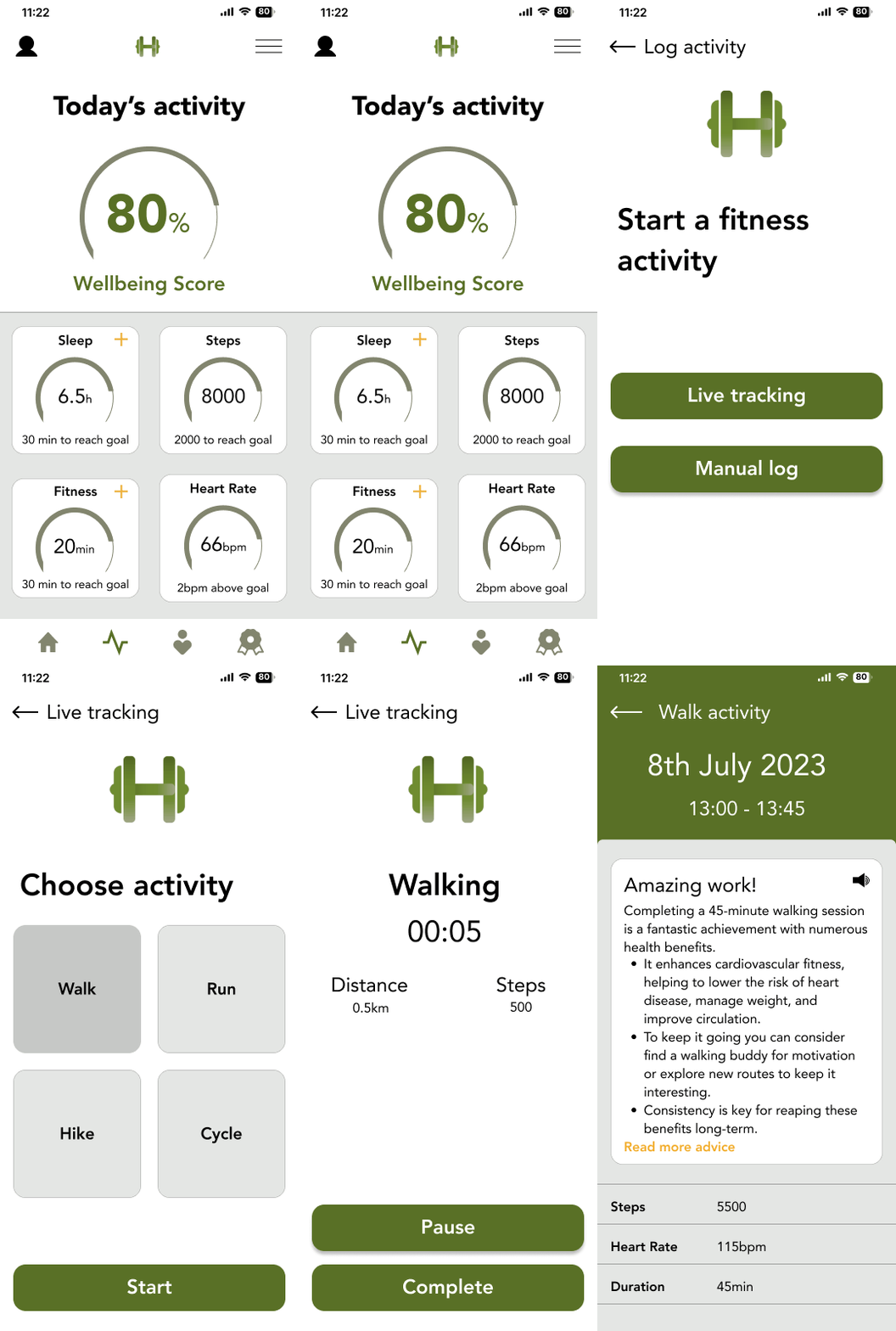
- Adding Activities: User testing revealed a gap in functionality. Participants encountered difficulty finding a way to log new activities within the Fitness screen. To address this, I ensured the ability to add new activities is readily available on both the ‘Home’ and ‘Activity’ overview screens, promoting effortless access and encouraging frequent logging.
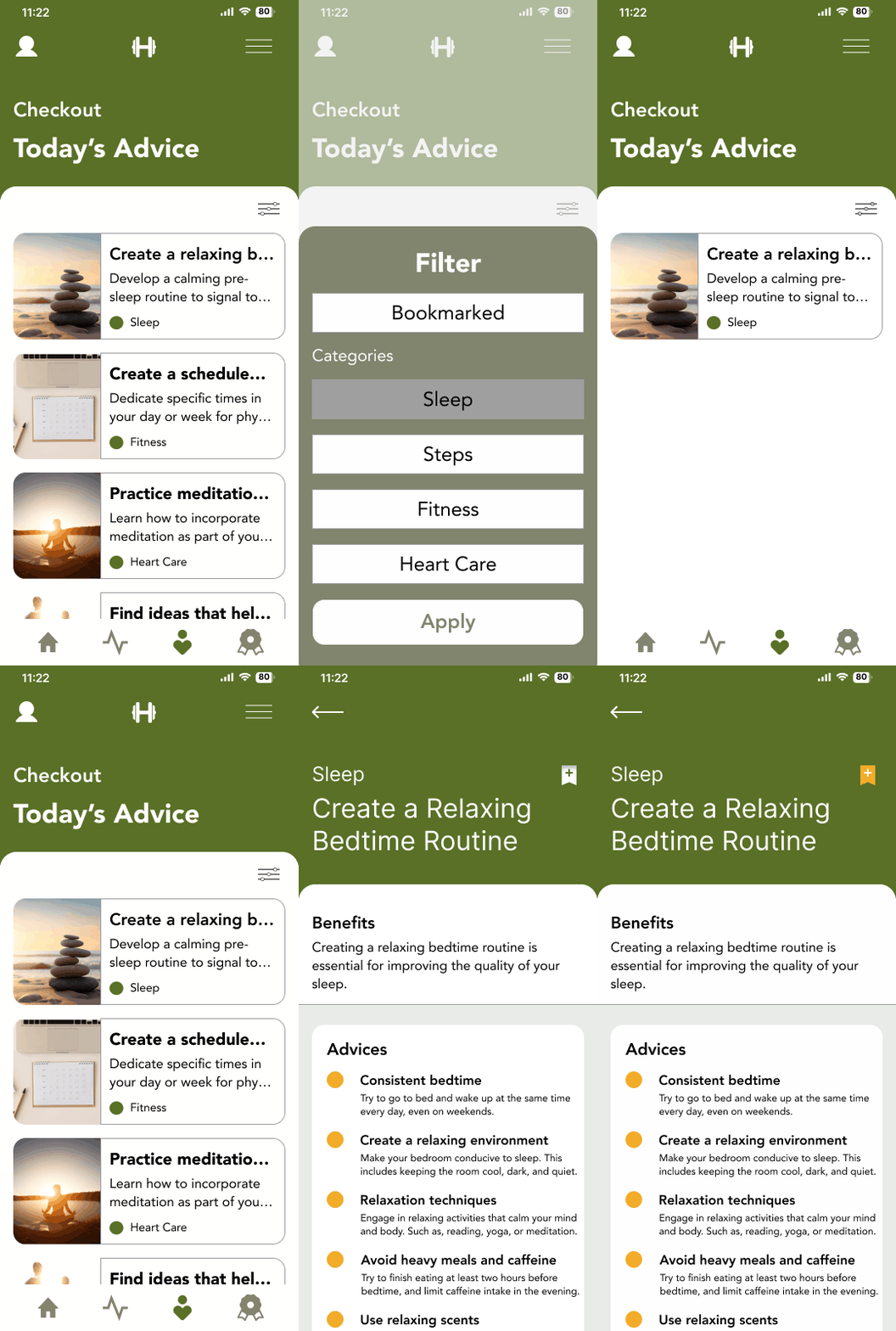
- Information Retrieval: User testing revealed a need for enhanced information discovery within the Advices screen. Initially, users lacked the ability to search, filter, or save content. Implementing functionalities like bookmarks, search options, and filters significantly improved the user's ability to find and retain relevant information.
Creating a Functional and Appealing UI
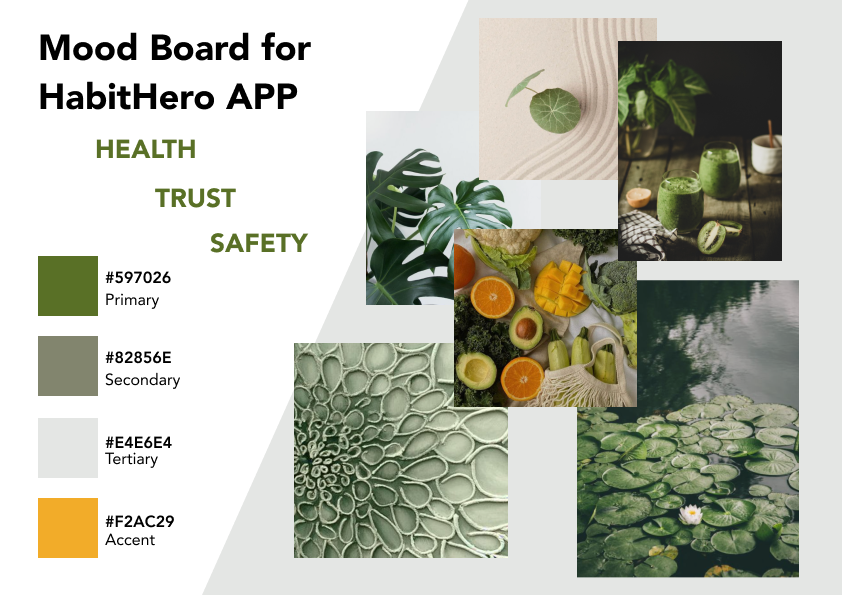
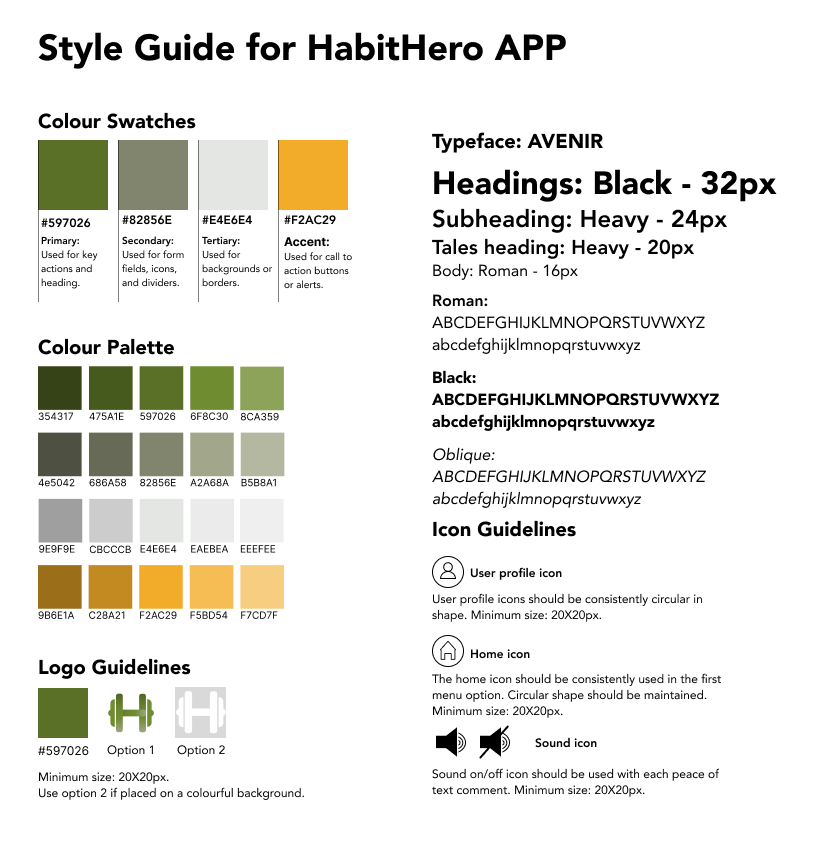
The user interface (UI) is critical for establishing trust and motivating users on their health journey. To achieve this, I defined a colour scheme that transmits a sense of health, safety, and well-being:
- Primary & Secondary Colours: Green (associated with nature, health and growth) creates a calming and balanced foundation.
- Tertiary Colour: A neutral light grey complements the green tones and promotes a professional, stable feel.
- Accent Colour: Vibrant cantaloupe contrasts with the green tones and adds a touch of energy and optimism.
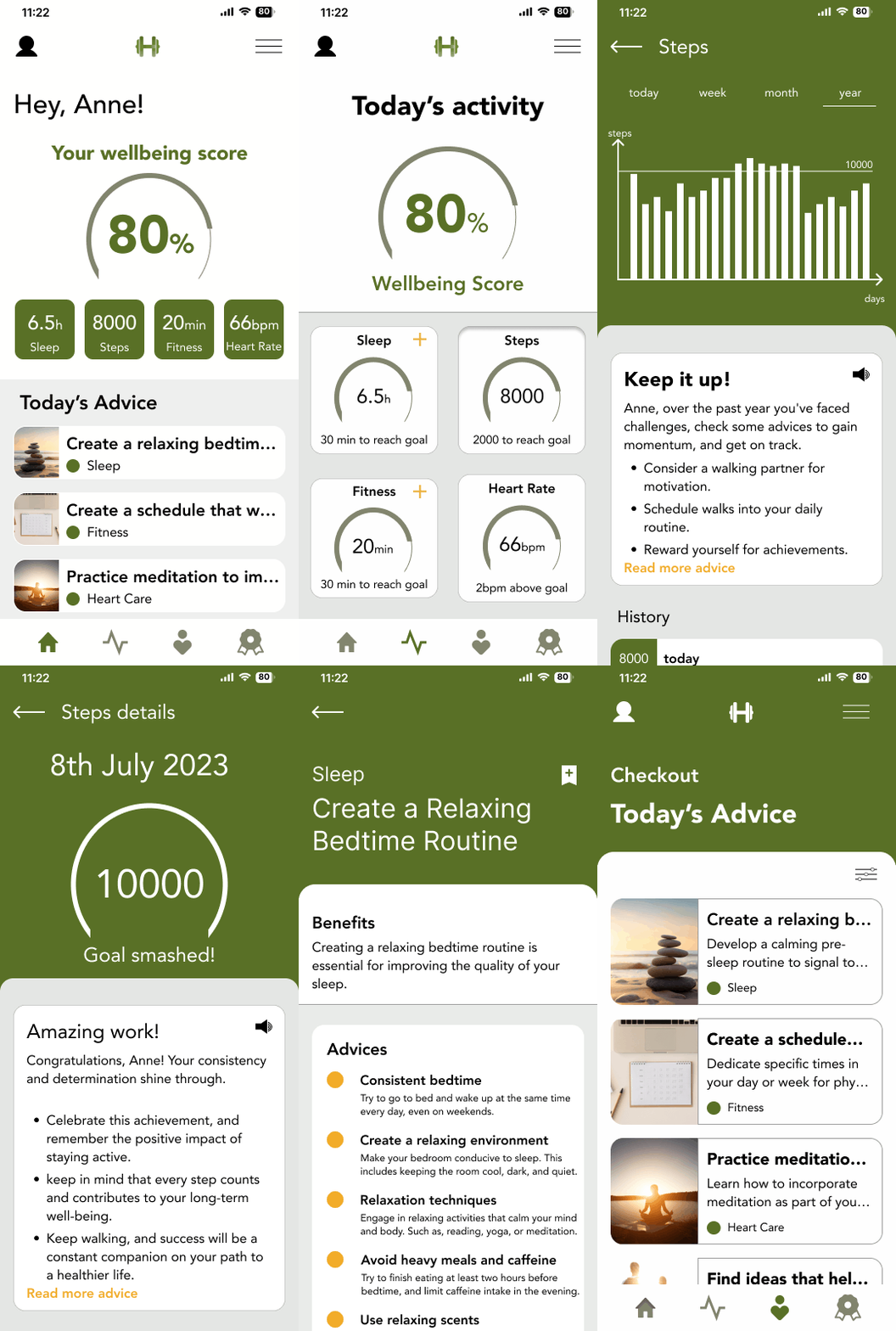
The UI adopts a clean and intuitive design aesthetic, ensuring a seamless user experience that mirrors the simplicity of the user flow. This translates to a minimalist approach, eliminating unnecessary visual clutter and prioritising the display of key information. With this design users also encounter essential details presented in clear, concise card-based layouts, ensuring effortless scannability and reducing cognitive load. This design approach empowers users on their health and wellness journey by providing an interface that is easy to use and visually appealing.
Conclusion: Empowering Users on Their Health Journey
HabitHero's design journey demonstrates the transformative power of user-centred design in crafting a health and wellness app that is both effective and engaging. By prioritising user needs throughout the design process and leveraging the latest technologies, we identified and addressed key challenges users face in achieving their health goals. The positive user testing results, showcasing improved efficiency and valuable feedback, solidify the app's potential to empower users.
While this initial iteration focused on streamlining the booking process, future developments hold exciting possibilities. Integrating functionalities like goal setting and smartwatch connections can further enhance the user experience and support users on their personalised health journeys.